
A kindergarten lesson that uses the artwork of the Capitol to teach the four seasons. It follows the Nebraska Department of Education Kindergarten Social Studies standard SS 0.3.3.b (Physical Systems). Teachers can use the lesson with its answer key; a simplified version is for students to use on their own.
The Capitol and the Four Seasons
The Nebraska State Capitol and the Four Seasons
Download the lesson (PDF, 467 KB)Download the answer key (PDF, 490 KB)Download the simplified student version (PDF, 525 KB)
For hundreds of years artists have used the seasons as subjects for pictures. These pictures are beautiful and educational. Artists have used flowers, plants and clothes to show the seasons.
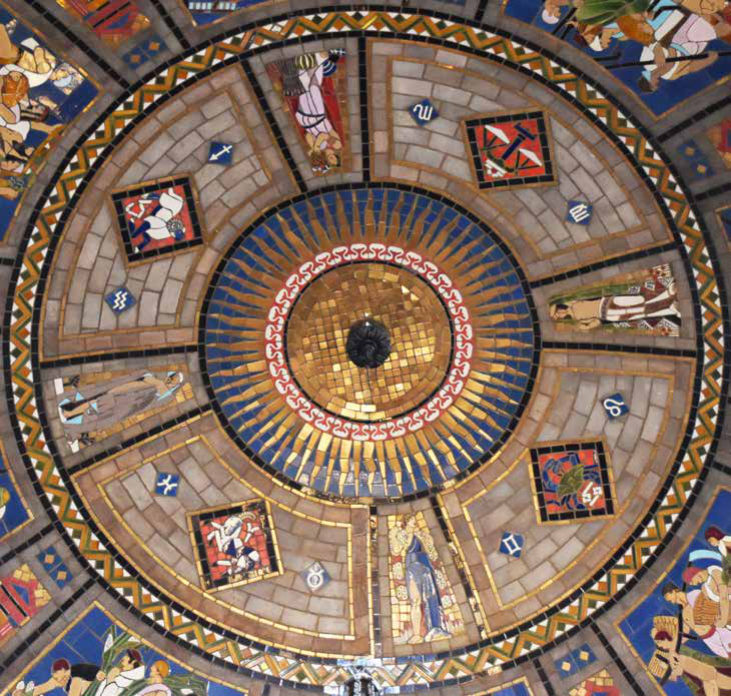
Capitol artist Hildreth Meiere, a mosaicist, created artwork showing the seasons in the Vestibule of the Capitol.
The Nebraska State Capitol and the Four Seasons
The artwork of the Nebraska State Capitol can be used to teach Nebraska Department of Education Kindergarten Social Studies Standards. Physical Systems SS 0.3.3.b. Identify the four seasons.
The State Capitol’s Vestibule tells about agriculture and nature in Nebraska. At the top of the dome is a large gold tile sunshine and around it are symbols of the seasons. The large vertical pictures in the circle have female figures dressed in different clothes to represent the seasons. This lesson uses the Vestibule dome mosaics to teach the four seasons.
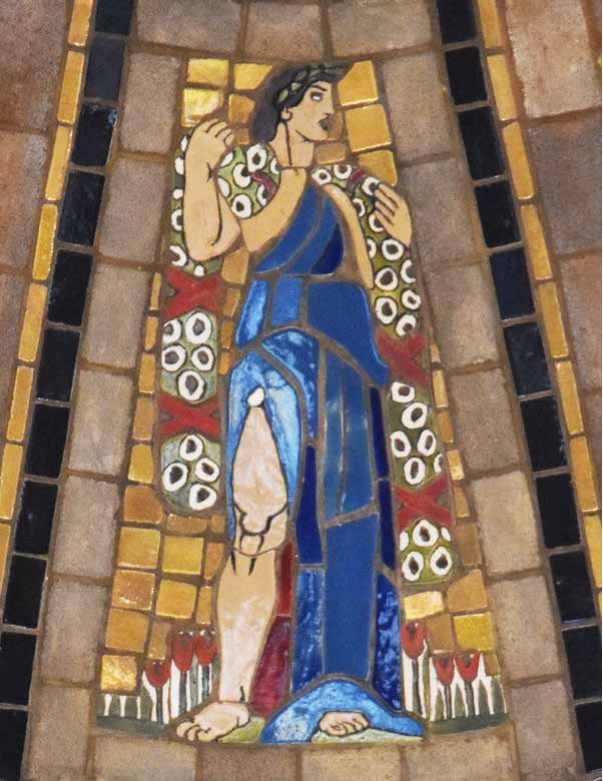
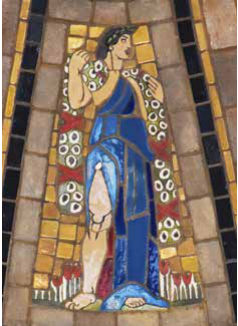
In this picture of SPRING there are flowers that grow in Spring. What kind of spring flowers are growing at the figure’s feet?
Spring is a time when the earth warms up after winter, the figure doesn’t need a cloak to keep warm but has a scarf. What is the design on the scarf?
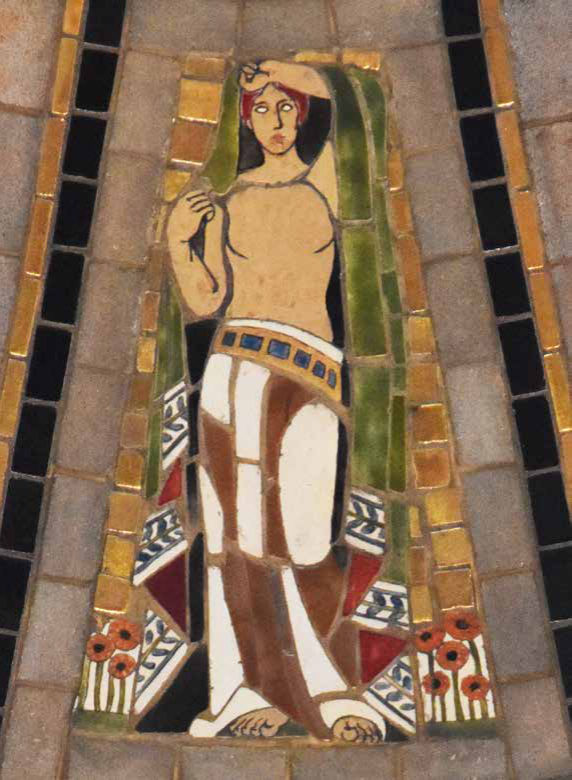
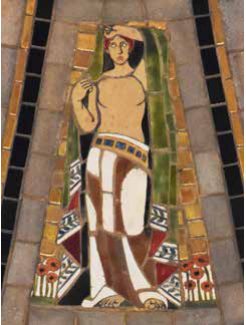
In this picture of SUMMER there are flowers that grow in summer at the figure’s feet. What kind of flowers could these be?
Summer wears a cloak over her head for shade. In summer what shines bright and hot?
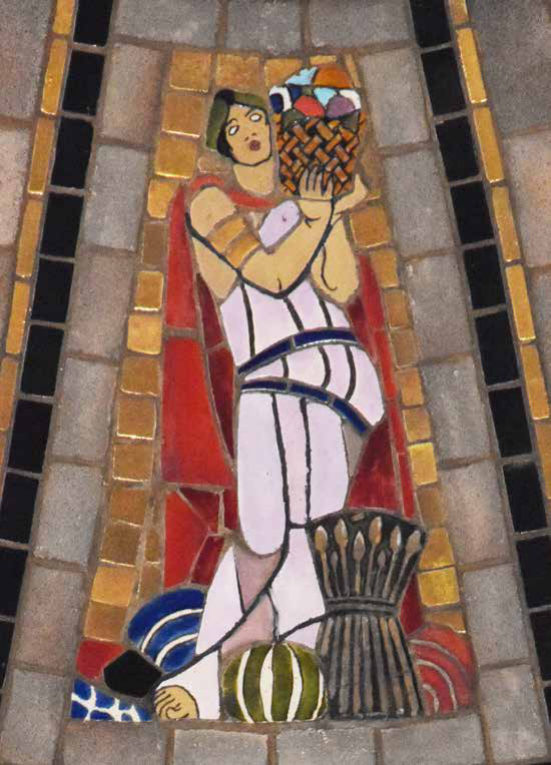
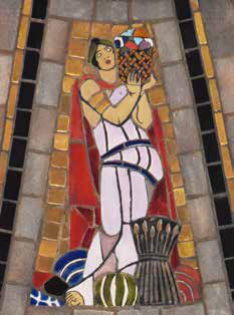
In this picture of AUTUMN the figure carries a basket. Fruits and vegetables are harvested in the Autumn. What kind of vegetables are at the figure’s feet? What fruit could be in the basket?
The figure has a cloak on her shoulders, but it is open because there are still warm days in autumn. She is wearing a hat to keep warm.
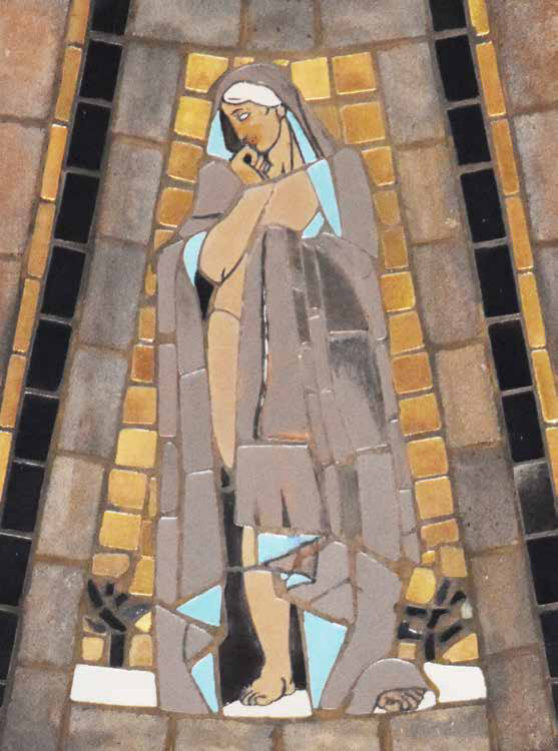
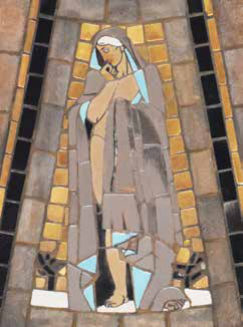
In this picture of WINTER there is snow at the figure’s feet and small black trees. Do these trees have leaves? Trees lose their leaves in winter.
Winter has a cloak around her. She looks like she’s trying to keep warm. Does she have her hood on?
Match the seasons
Draw a line from the season’s name to the picture of the season: Winter, Spring, Summer, Autumn.
Discussion questions for students
Compare the artist’s choice of color in the pictures. How do the colors the artist used for the figure’s clothes represent the seasons? Notice the hair color of the figures representing summer and winter. How does the color red represent summer? How does the color white represent winter?
Vocabulary
- Agriculture (ag ri kul chur)
- farming, growing crops, raising farm animals
- Cloak (klok)
- a loose cloth covering for a person
- Dome (dom)
- a ceiling that looks like the inside of a hollow ball cut in half
- Figure (fig yur)
- a drawing of a person or thing
- Harvest (har vist)
- to gather agricultural crops
- Mosaic (mo za ik)
- picture made with small pieces of stone, glass, paper or other material
- Mosaicist (mo za a sist)
- an artist who makes mosaics
- Vertical (vur ti kull)
- up and down, taller top to bottom than side to side
- Vestibule (ves ta byool)
- an entrance room of a building