A self-guided walking tour of the Capitol’s exterior, using the perimeter sidewalks.
Exterior Walking Tour
A Guide to the Exterior Art and Symbolism
Begin on the north side
Begin on the north K Street side of the Capitol
Designed by New York architect Bertram Grosvenor Goodhue, and constructed between 1922 and 1932 at a cost of $10 million, this state Capitol is a symbol of Nebraska rather than a copy of the nation’s Capitol.
The Indiana limestone building’s wide flat base reflects the broad open expanse of the prairie; the tower rises from the center of the cross inside the square base with the hopes and dreams of Nebraska’s people. The monumental tower, visible from 20 miles away, guides citizens to their government.
Dedicated to service and sacrifice.
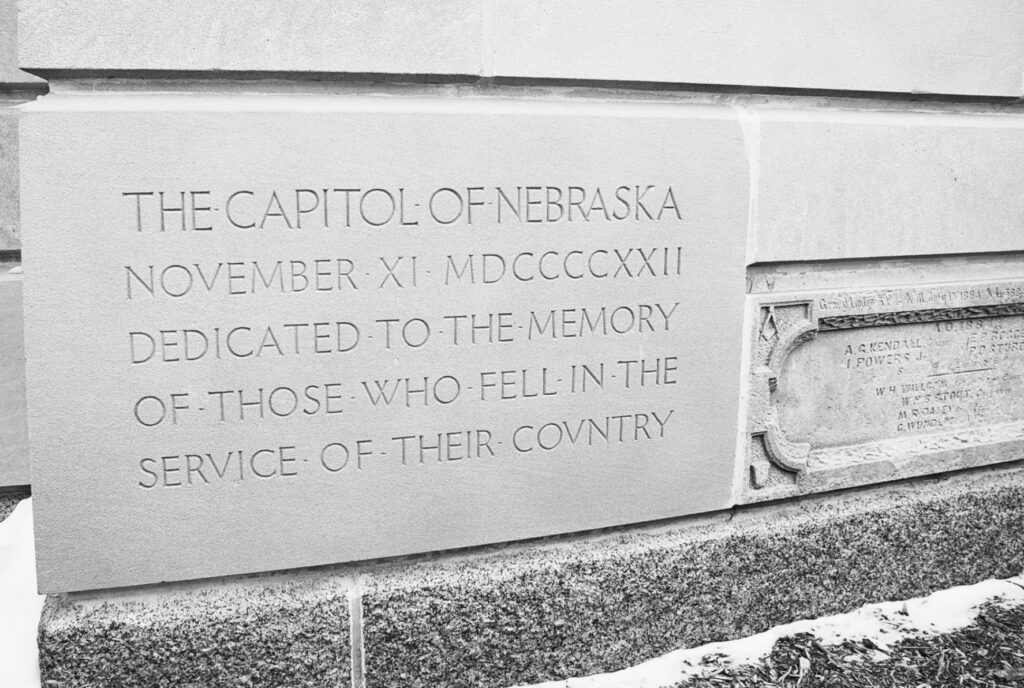
With the cornerstone of the second Capitol beside it, the cornerstone of this third Capitol on this site honors those who fell in WWI and was dedicated on Armistice Day in 1922.
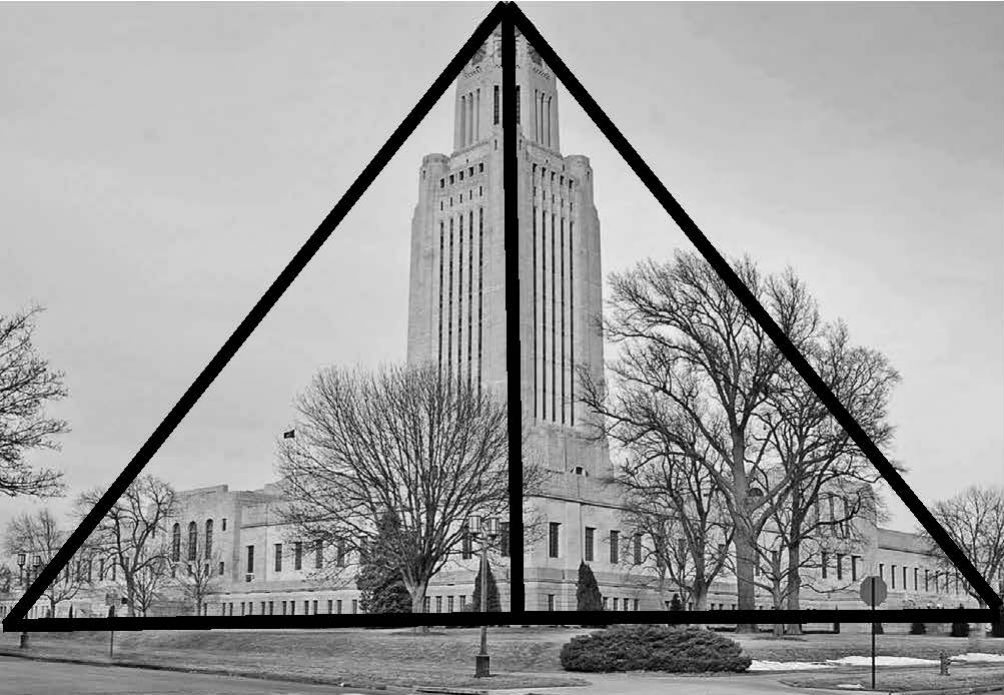
The architect emphasized the memorial nature of the Capitol with the 437’ square base and 400’ tall tower forming a pyramid, an ancient Egyptian memorial.
Goodhue further referenced Egyptian architecture by using strong geometry, seen in the Temple at Karnak and the Temple of Hatshepsut, to give the building visual weight on the open prairie landscape.
Goodhue placed an octagonal Memorial Chamber honoring citizens in service of others on top of the Capitol’s square office tower.
Surrounding the solemn black marble chamber on 14th floor, observation decks provide views of Lincoln and the surrounding countryside and are open weather permitting. The two north rotunda elevators go to the 14th floor. They are small, but the northeast elevator will hold a standard wheelchair.
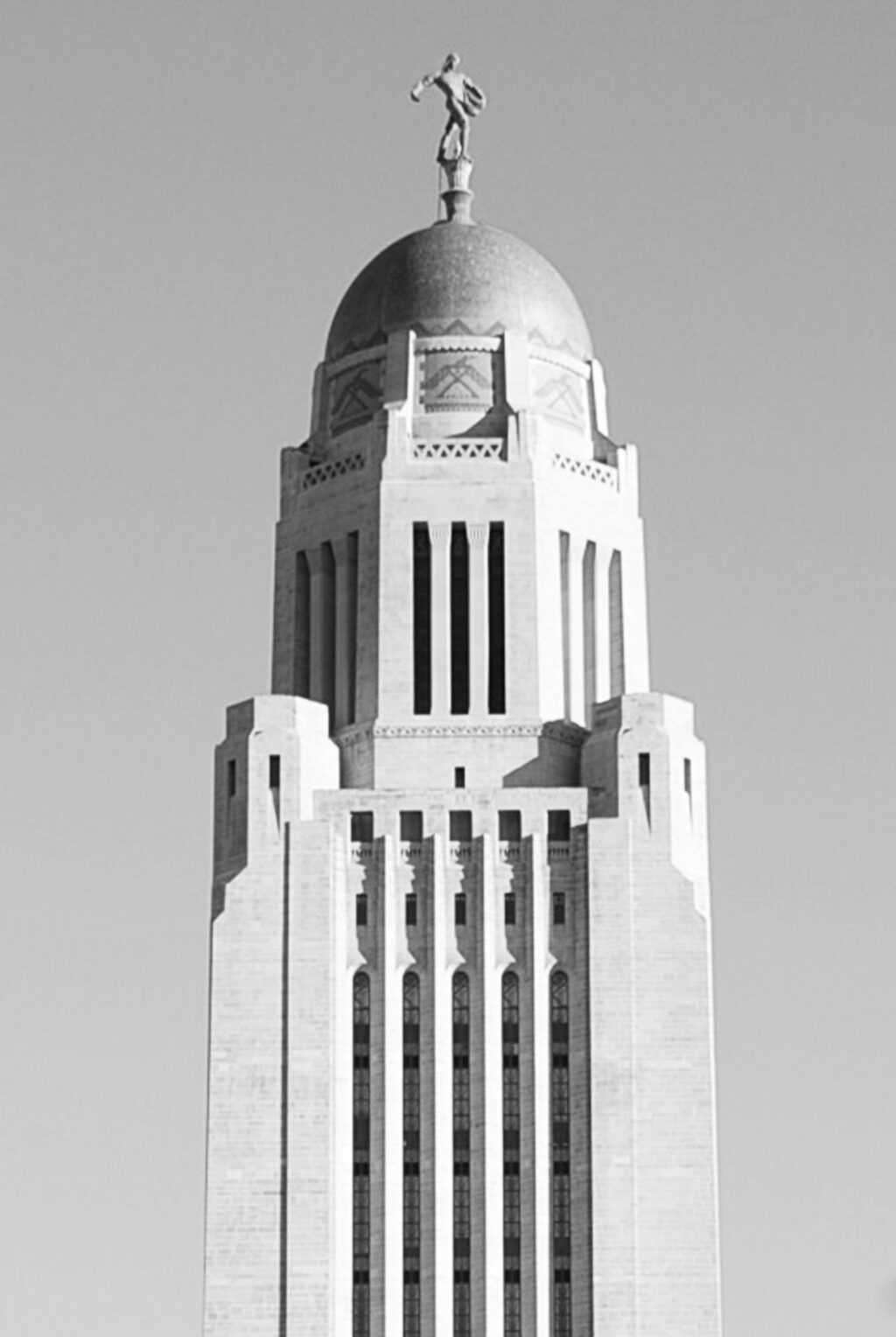
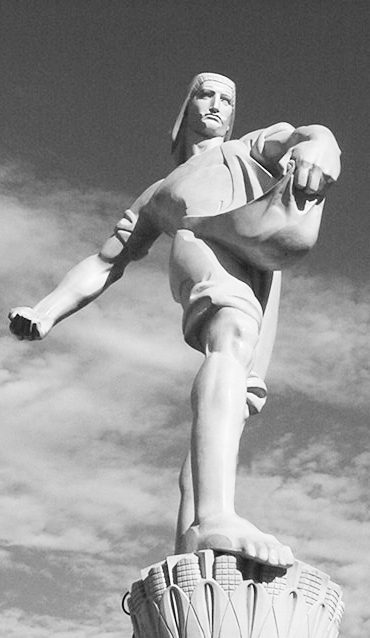
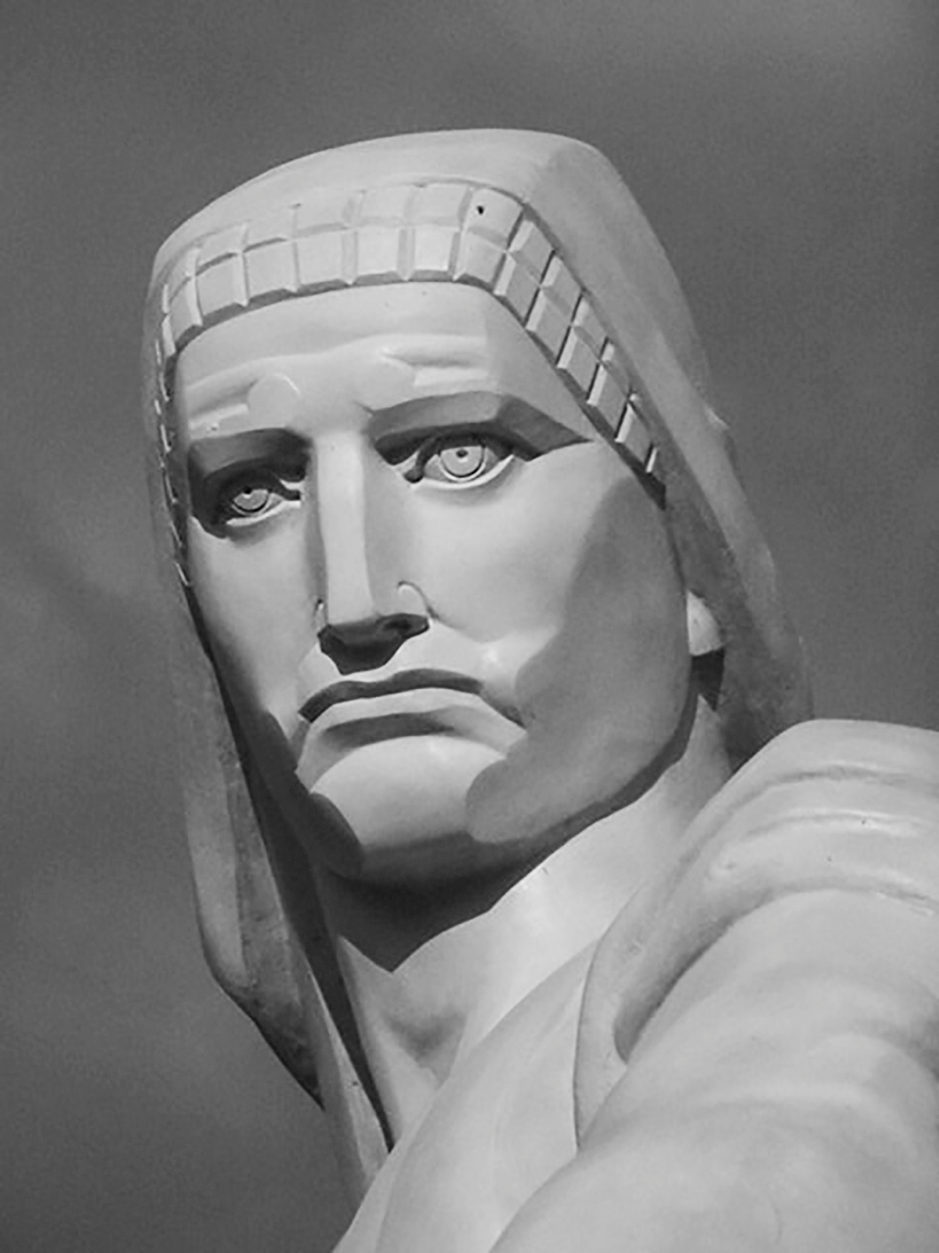
The Sower by Lee Lawrie
On top of the Capitol stands a 9.5 ton cast bronze statue of an ancient farmer sowing seeds of noble life and memorializing the development of civilization based on agriculture. Beneath the gold tile dome is a Native American Thunderbird, a symbol of the rain needed for productive agriculture in Nebraska.
The north entrance
The story of Nebraska and its place in Western Civilization begins on the north entrance portal.
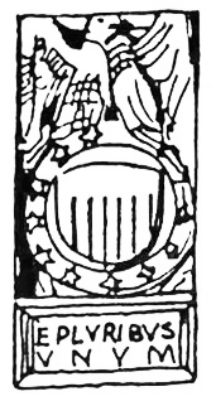
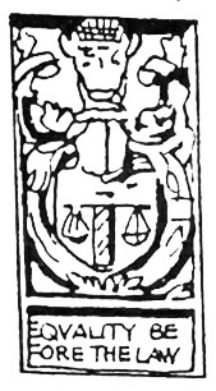
On the corners of the monumental pylons flanking the entrance, coats of arms of the United States and Nebraska identify the building as the Nebraska State Capitol without words.
Nebraska’s Political History
Using the building as the medium, architect Bertram G. Goodhue, thematic consultant Hartley Burr Alexander, Ph.D. and sculptor Lee Lawrie present the history of western civilization in the exterior relief sculpture.
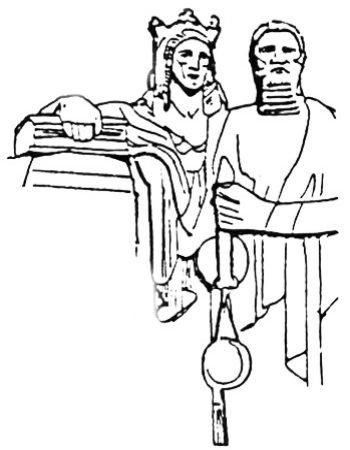
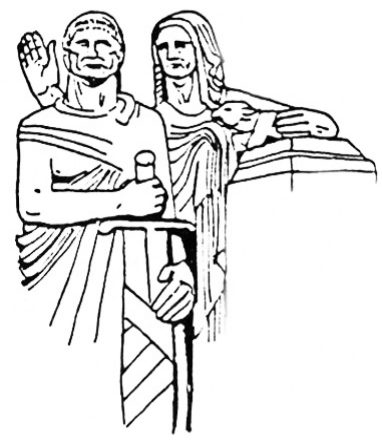
Across the top of the north entrance are the Guardians of the Law
Wisdom – Justice Greek figure with law book and a crown of light Hebrew figure holds the scales of justice
Power – Mercy Roman figure draws a sword Christian figure with lamb raises hand to stay power
Walking west along the north side
Walk west along the north sidewalk, notice the geometric detail of the tower and how the angled walls between the tower windows briefly make the tower façade appear solid, notice the way light and shadow animate the tower’s façade and turrets.
At the mid-point of the sidewalk figures appear at the base of the tower. The engaged figures on each side represent great thinkers and philosophers and their ideas on the spirit of history and civilization.
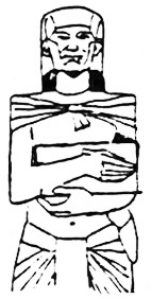
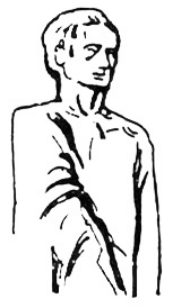
Pentaour and Abraham Lincoln appear on the north parapet to represent the beginning and end of Alexander’s ideas on the nature of human thought in Western Civilization.
At the beginning, Pentaour recorded the life and heroics of the great pharaohs and leaders of Egypt for future generations to remember and honor.
By the end, Abraham Lincoln emphasized that people represent the humanity of a nation and the lives and liberty of the people should be remembered and honored.
Above the 93 Nebraska county names circling the building the History of Western Civilization appears in relief sculpture.
County names are organized by the number of letters in their name, longer names are on the corners and four-letter county names are near the pavilions.
The first three panels in the northwest corner represent ancient Hebrew law as divinely inspired.
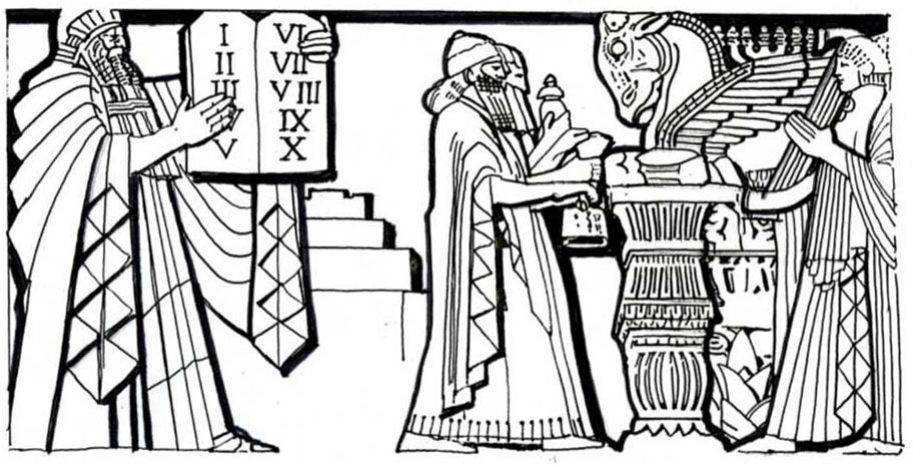
Moses Brings the Law from Sinai (c. 1270 BC)
Moses went down from the mount with the laws written by God and saw the false idol and in his anger cast the tablets down and broke them.
Continue around the corner to northwest face.
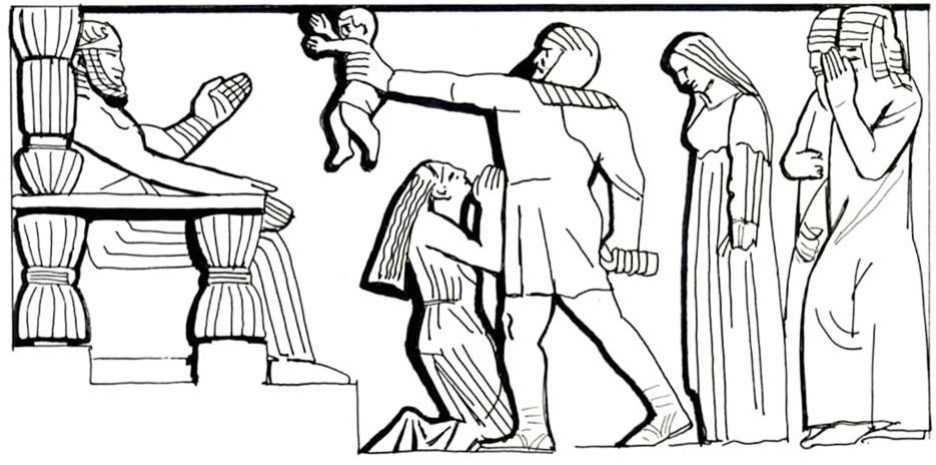
The Judgement of Solomon (c. 1270 BC)
Two women claimed a baby. Solomon settled the dispute by ordering the baby cut in half, knowing the true mother would give up the baby to save it. Israel saw God’s wisdom in him.
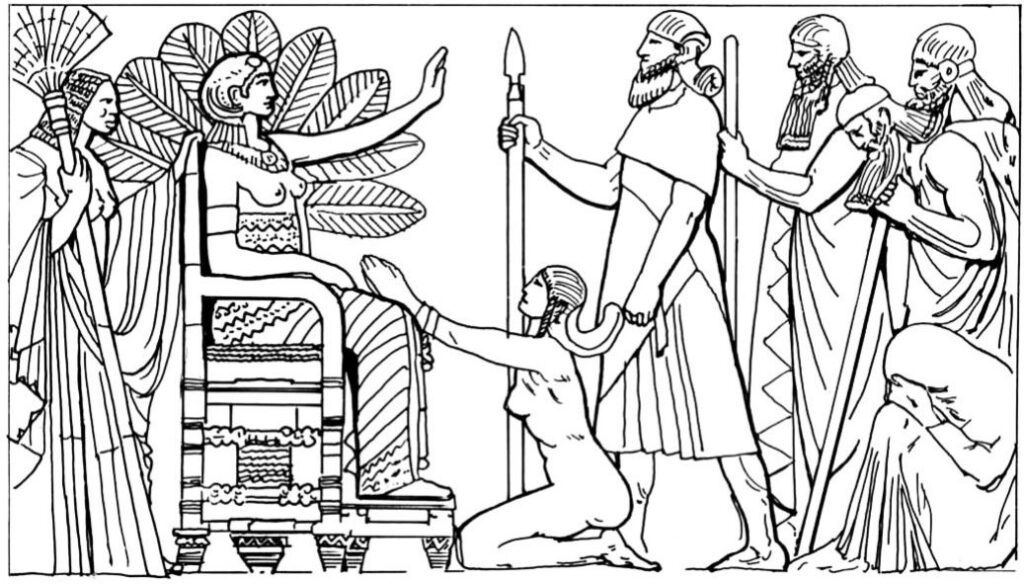
Deborah Judging Israel (c. 1150 BC)
Deborah, prophetess and military leader, dwelt under a palm tree and the children of Israel came to her for judgement and guidance.
At the base of the west side of the tower the two engaged figures represent contrasting philosophical traditions.
Ezekiel represents the Cosmic Tradition of the seer or prophet.
Socrates represents the Birth of Reason and empirical thought.
The west side and the Lincoln Monument
The Lincoln Monument predates this Capitol by 10 years and was funded by Nebraskans to honor the Great Emancipator in the city named for him. Nebraska Civil War veterans unveiled the statue at the 1912 dedication ceremony. William Jennings Bryan gave the day’s major address to the thousands filling the second Capitol grounds and 14th and J Streets. In the early 1980’s, J Street west to the county/city seat of government was renamed Lincoln Mall.
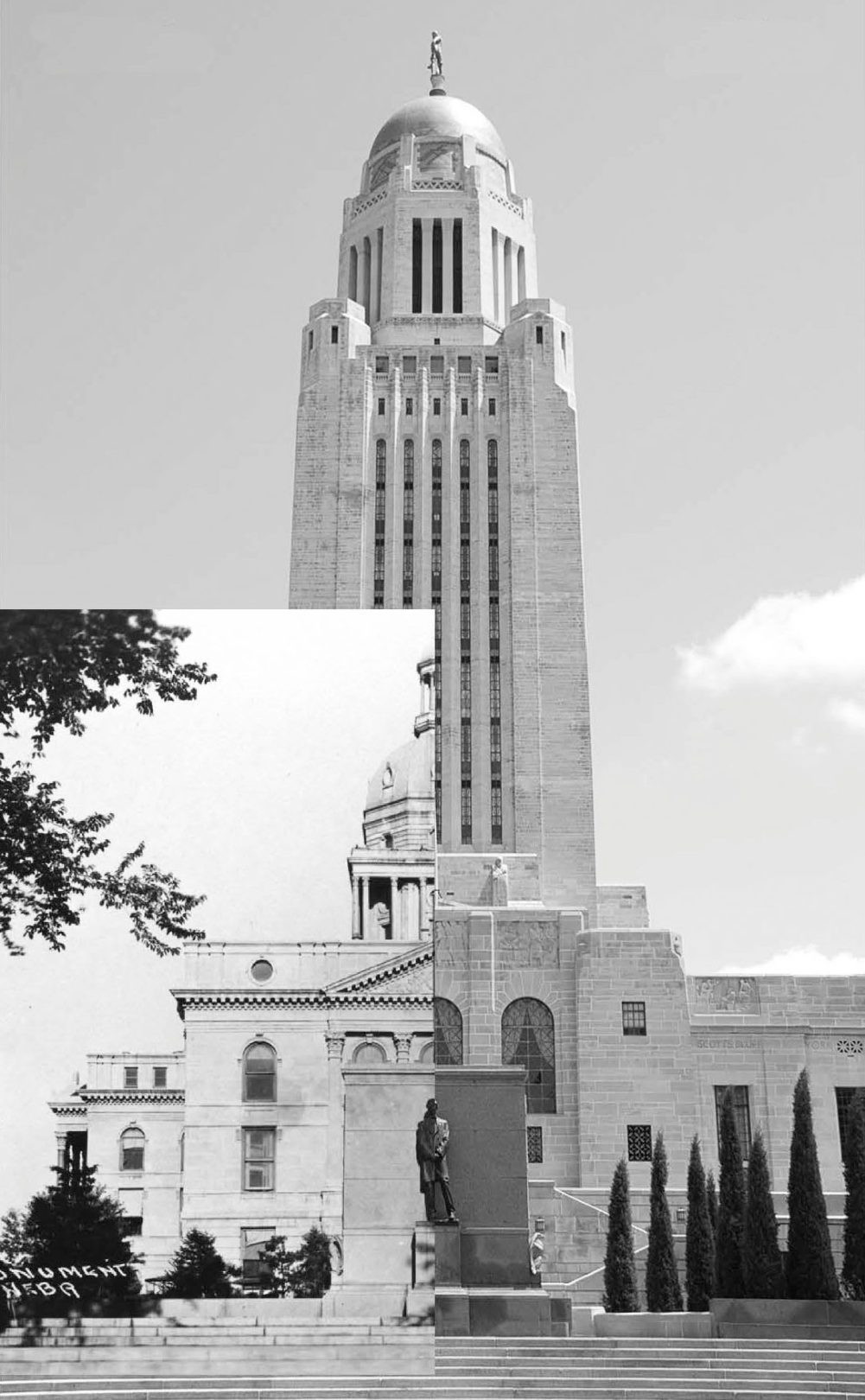
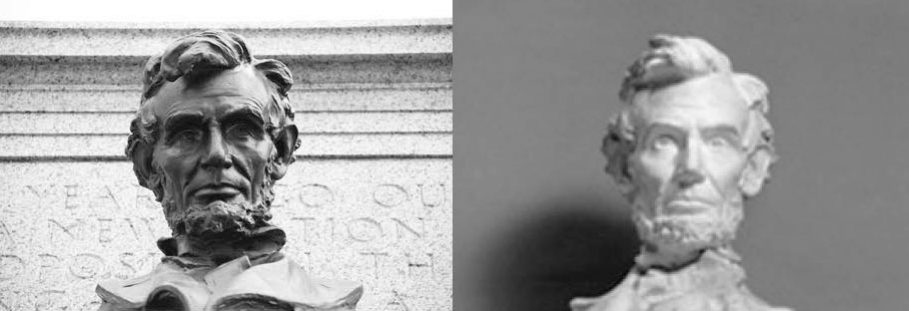
The plaza’s architectural setting and statue were created by Henry Bacon and Daniel Chester French. They went on to create the Lincoln Memorial in Washington, D.C.
French used a life mask of Lincoln to create the two likenesses, here in bronze, left and right, in Washington in marble.
The West Pavilion houses the Unicameral Legislative Chamber
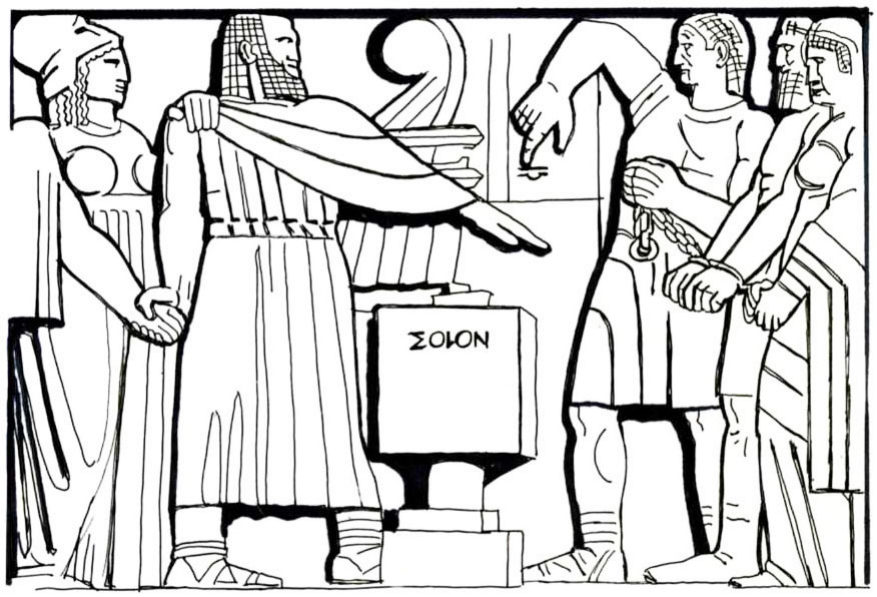
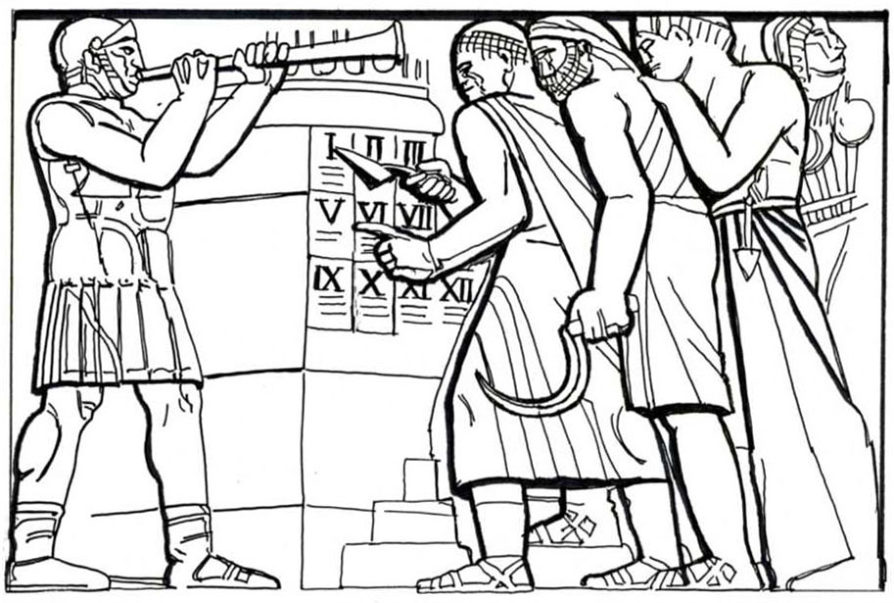
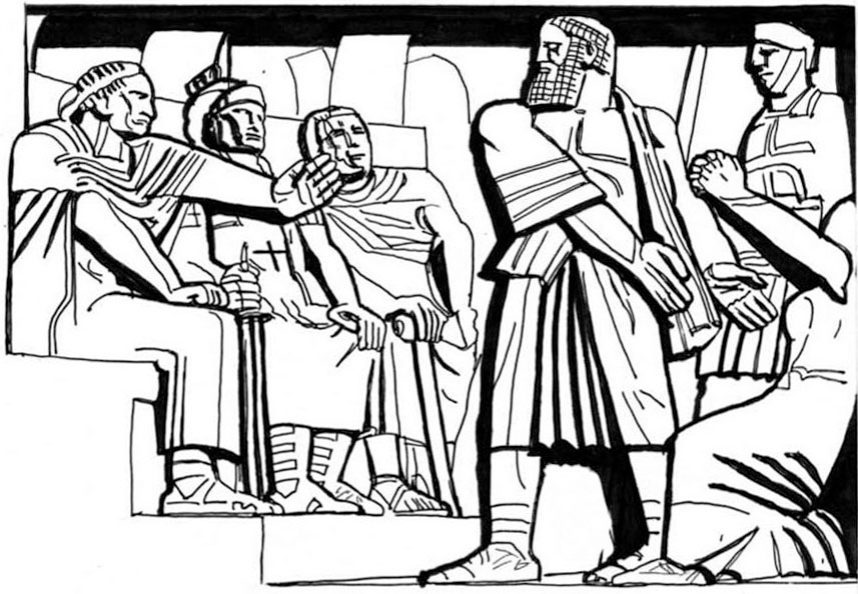
The relief panels above the west entrance represent the foundations of democracy and the republic in Greek and Roman law.
Solon Gives a New Constitution to Athens (c. 570 BC)
Solon was chosen as an arbitrator and lawgiver in Athens because he was seen as honestly representing the interests of the upper and lower classes.
The Publishing of the Twelve Tablets in Rome (c. 450 BC)
Roman law was amended in consideration of public opinion and published for all to see, forming the basis of public and private law.
The Establishment of the Tribunate of the People (c. 442 BC)
Patrician abuse of power in Rome lead to a revolt which won the right of the plebians to a place on the tribunal.
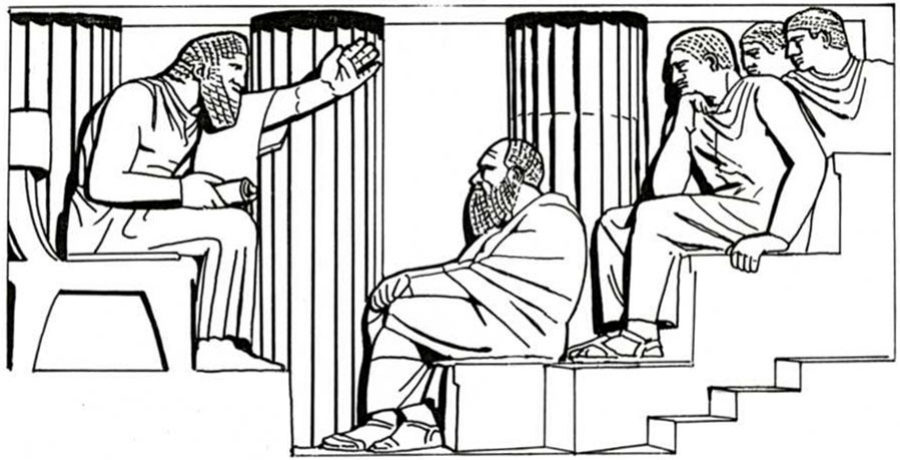
Plato Writing His Dialogs (c. 380 BC)
Plato taught justice is a harmony of human virtues and these virtues are civic because man is by nature and necessity political.
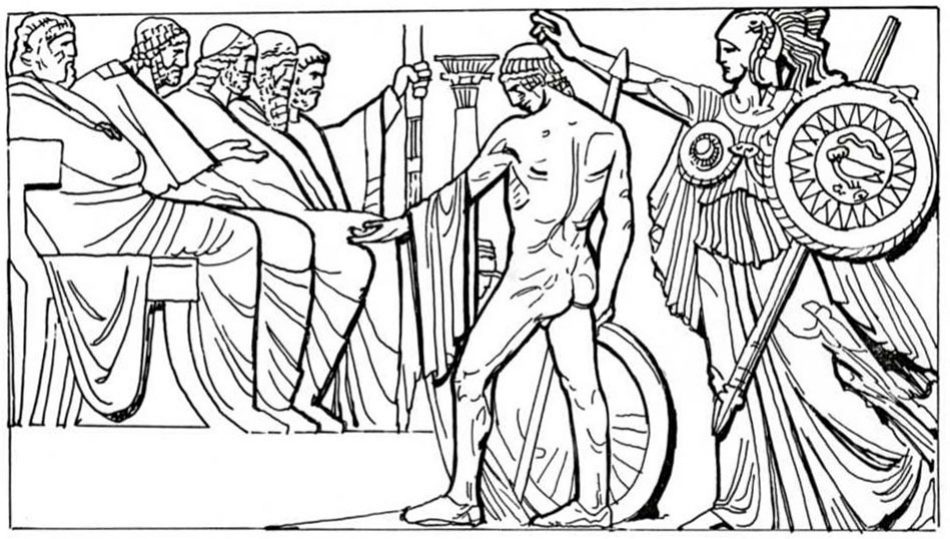
Orestes Before the Areopagites (c. 458 BC)
A play by Aeschylus documents an avenging murder which leads to the creation of the institution of the jury and the abolishment of the requirement of blood revenge.
Walk south to see the last two panels showing ancient law and beginning of our legal system.
Around to the south entrance
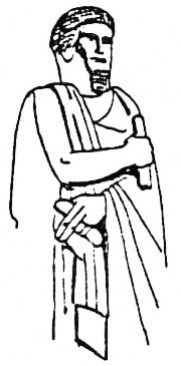
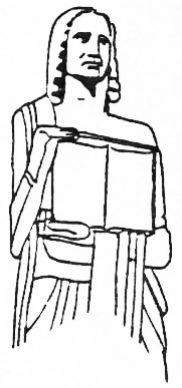
As you walk around the corner to the south entrance two figures appear at the base of the tower and represent different philosophies of decision making.
Marcus Aurelius represents the rule of law based on reason in the stoic tradition.
John the Apostle represents the role of faith in guiding our actions and laws.
The South Façade sculpture represents the Development of Laws and Constitutions
The south pavilion houses the Judicial Branch of Government, the Supreme Court and State Law Library.
Notice how the varied size of the evergreens, largest at the street and smallest near the Capitol, create a false perspective to elongate the entrance.
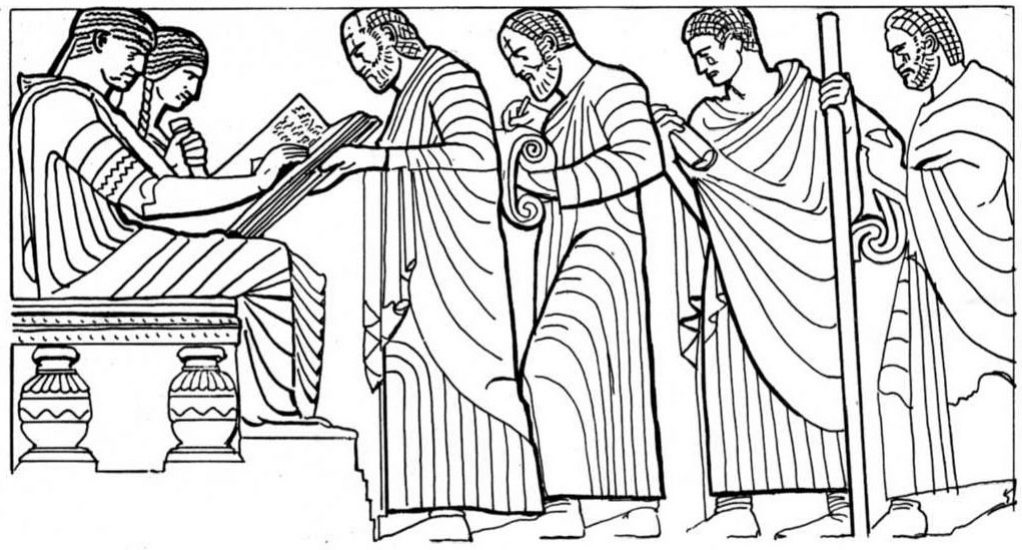
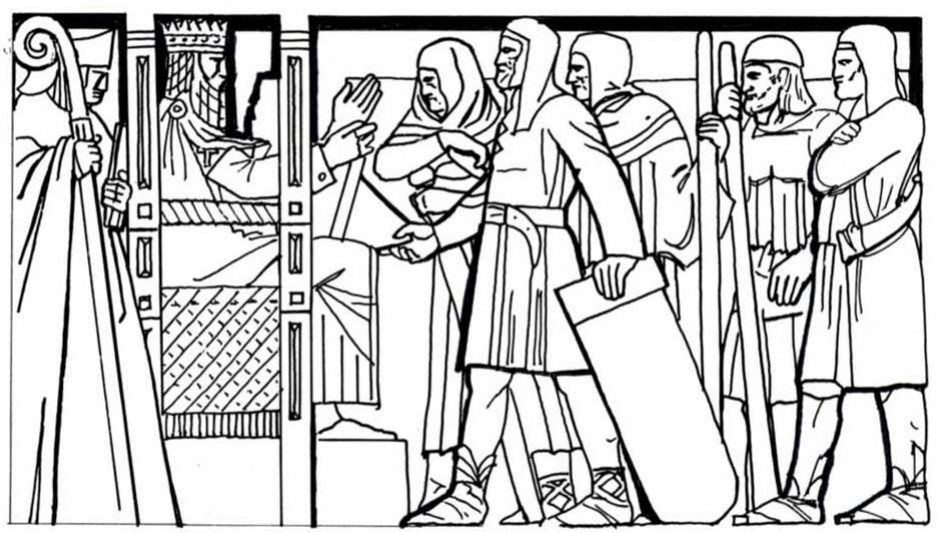
The panels on the west and east ends of the south façade show early attempts to join people under a unifying set of laws.
Justinian Codifies Roman Law (c. 530)
Emperor Justinian reviewed and combined early Roman legal texts into a single administrative document for the empire.
Ethelbert Codifies Anglo-Saxon Law (c. 600)
King Ethelbert organized the customs and practices of the Germanic tribes settling Great Britain to create a unified set of laws.
Great Law Givers of Western Civilization
Beneath a quote from Aristotle engaged figures across the pavilion portray law givers from ancient mythology through modern political thought. The ancient and modern lawgivers carved on the north corners can best be seen from the interior.
Minos was a mythical Greek ruler who received wisdom from the gods and judged the dead.
Napoleon spread ideas from the French Revolution, equality, personal liberty and efficient administration, to a conquered Europe laying the foundation for modern democracies.
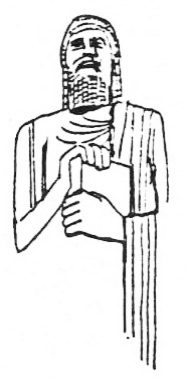
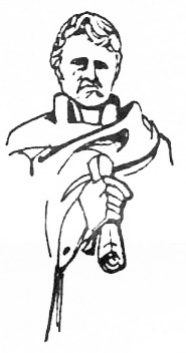
Above the Law Library’s arched windows, the figures on the left represent the wisdom of ancient times.
Hammurabi’s Code established an early legal system for Babylonia focused on crime and punishment.
Akhenaten abandoned the polytheism of earlier Egyptian pharaohs and adopted monotheism.
Moses freed the Hebrews from slavery, brought them to the promised land and delivered the laws of Israel.
Solon reformed a failing the Greek legal system and laid the foundation for Athenian democracy.
Solomon built the first Hebrew temple in Jerusalem and expanded a united kingdom of Israel through military force.
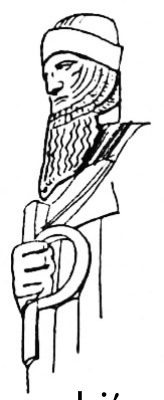
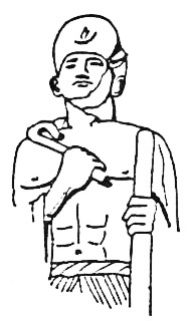
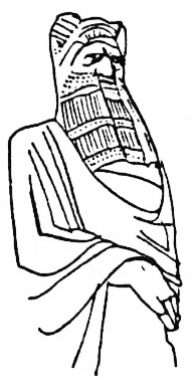
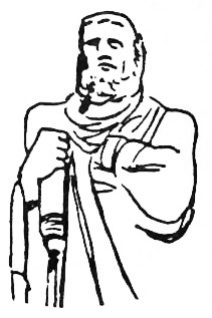
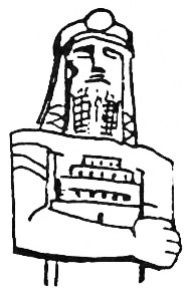
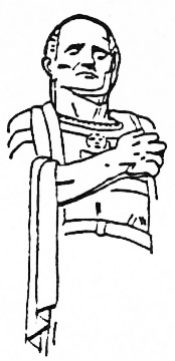
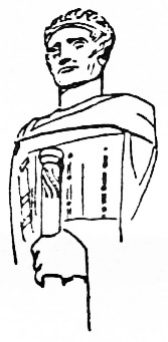
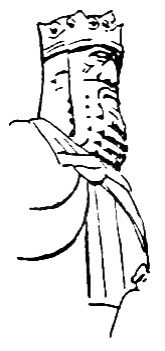
The figures to the right represent European lawgivers
Charlemagne reunited the western Roman Empire through successful military campaigns and become the first emperor of the Holy Roman Empire.
Justinian ruled the eastern Roman Empire and battled to return territories in the west to Roman rule. He consolidated Roman law with judicial reforms and rights for women.
Julius Caesar expanded the Roman Empire and instituted social and governmental changes from Rome with land reforms and citizenship for people in conquered regions.
The Development of Constitutional Law
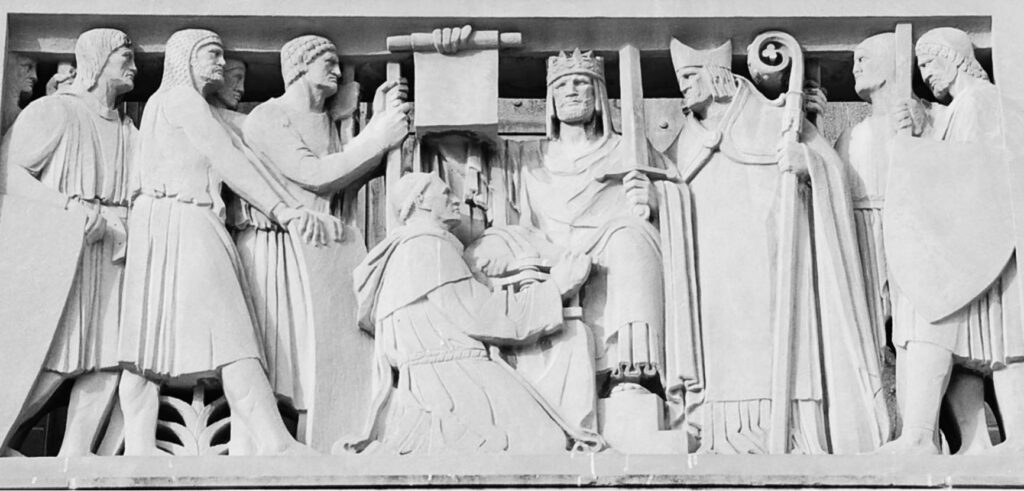
The three panels on the pavilion show legal documents outlining the responsibilities of the governed and their government. The center panel is the founding document of English Law.
The Signing of the Magna Carta (1215)
King John and feudal leaders negotiated a contract to protect the right to quick and impartial justice, lower taxation and a promise to protect church rights.
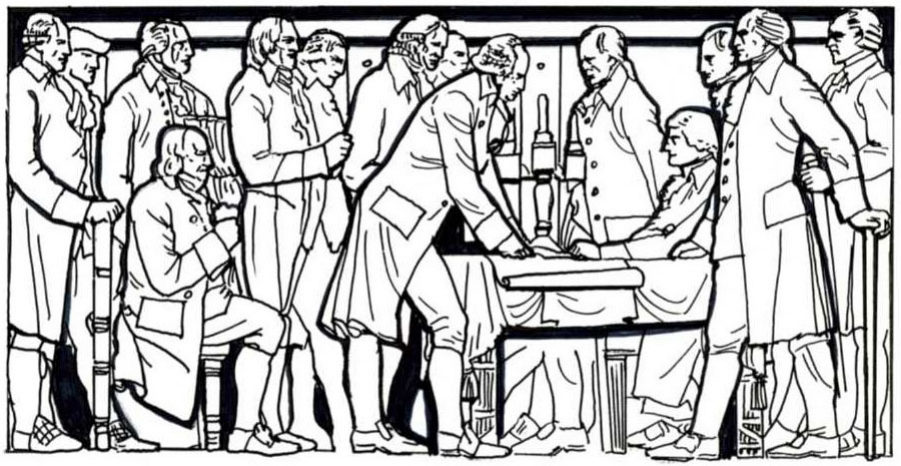
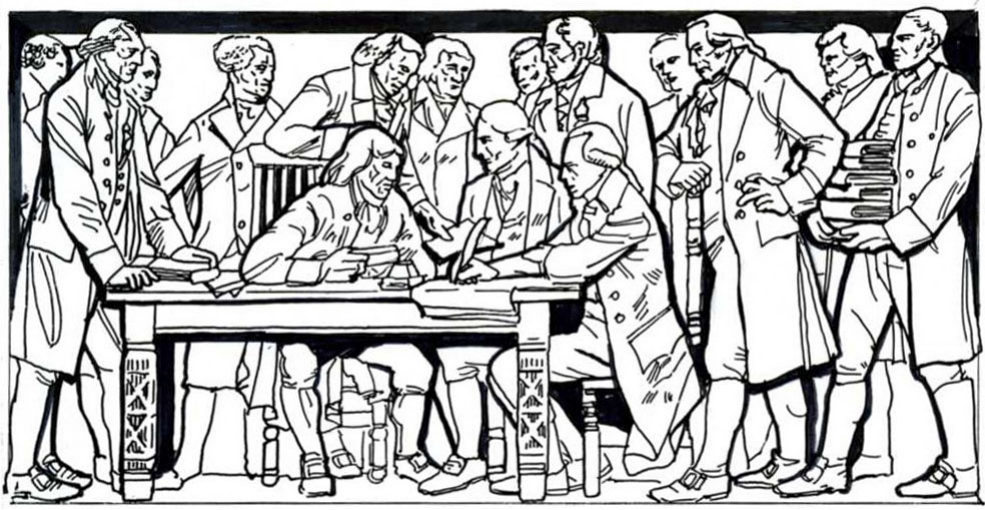
The outer two panels show the beginning of American democracy
The Writing of the Constitution of the United States (1798)
“We the People of the United States, in order to form a more perfect unity, establish justice, ensure domestic tranquility, provide for common defense, promote the general welfare and secure the blessings of liberty for ourselves and our posterity do hereby…”
The Signing of the Declaration of Independence (1776)
Unhappy with their treatment by the King of England, the colonists declare, “All men are created equal… with unalienable rights… life, liberty and the pursuit of happiness…” and therefore must achieve independence from British rule.
The east side
As you proceed to the east entrance, the two figures at the base of the tower represent different rules which guide man’s life.
Louis IX lived and ruled piously guided by fairness and the moral integrity of the church and the code of chivalry.
Isaac Newton studied the laws of nature and laid the foundation for scientific thought to guide life in the modern world.
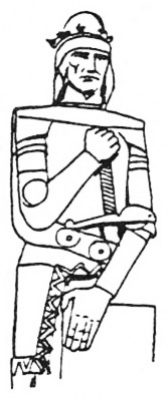
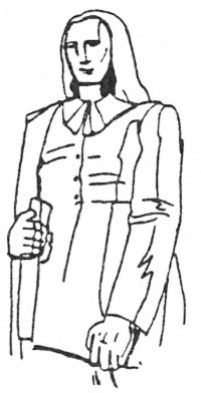
The East Façade Relief Represents Concepts of Freedom That Traveled From Europe to America and Finish With Nebraska’s Political History.
Built with two legislative chambers, the east pavilion housed the Senate before the adoption of the Unicameral in 1934.
Founding Concepts of Political Freedom
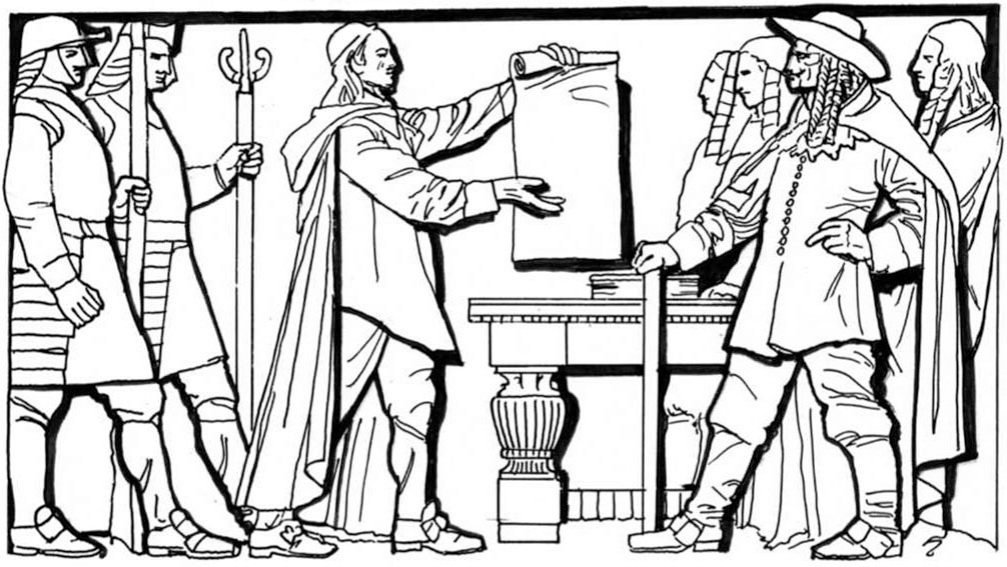
Milton Defending Free Speech before Cromwell (1644)
Milton argued against censorship of the press and defended intellectual liberty in Parliament. This idea was included in the first amendment to the United States Constitution in 1791.
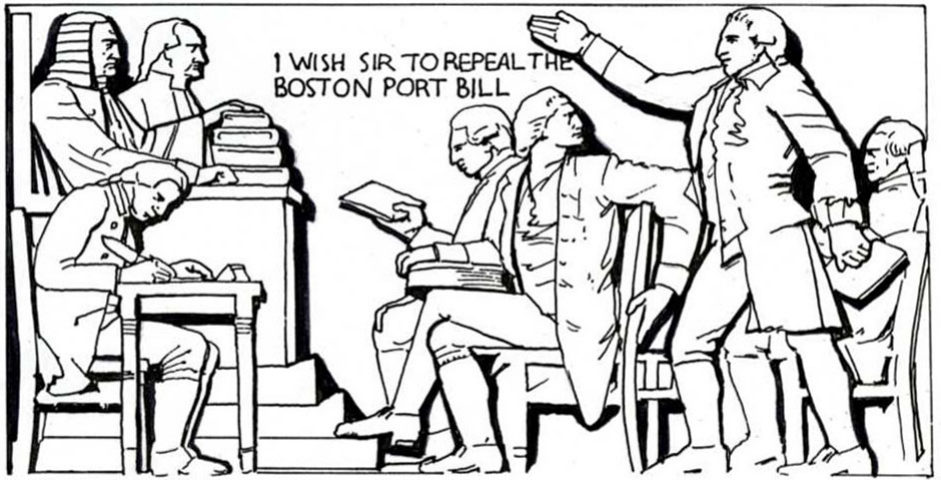
Burke Defends American Colonies in Parliament (1775)
Burke encouraged Parliament to recognize the colonies’ love of liberty as British subjects and give them the responsibility to provide the taxes upon which to base representation.
The east pavilion relief panels represent the quest for freedom as Europeans moved onto the newly discovered continent.
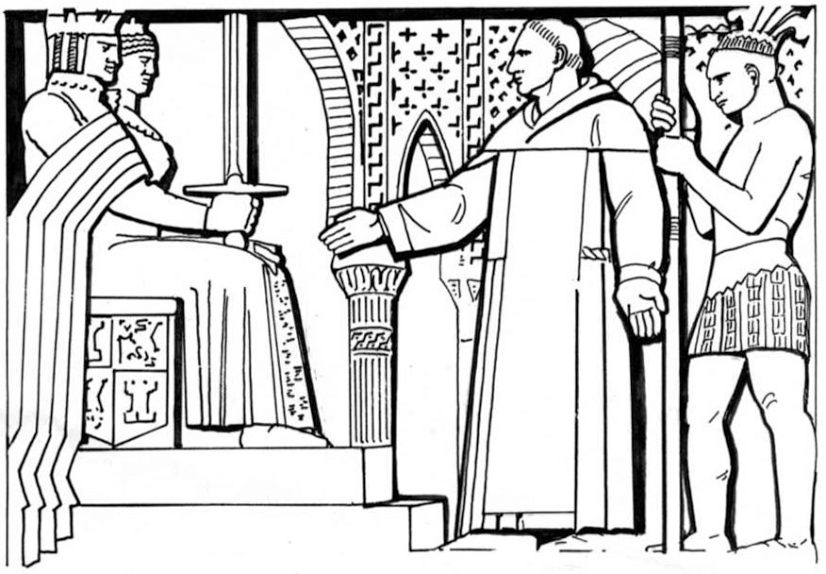
Las Casas Pleads for the Indian (c. 1540)
At the Spanish court Las Casas argued that the rights of Europeans should be granted to Natives in the new world.
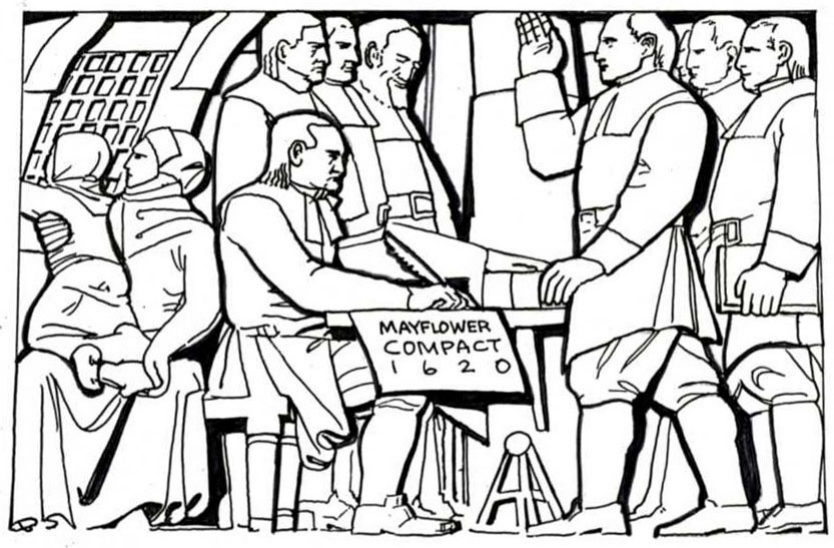
The Signing of the Mayflower Compact (1620)
Before setting foot in the new land, the Pilgrims agree to establish a civic body politic to better order and preserve the good of the colony.
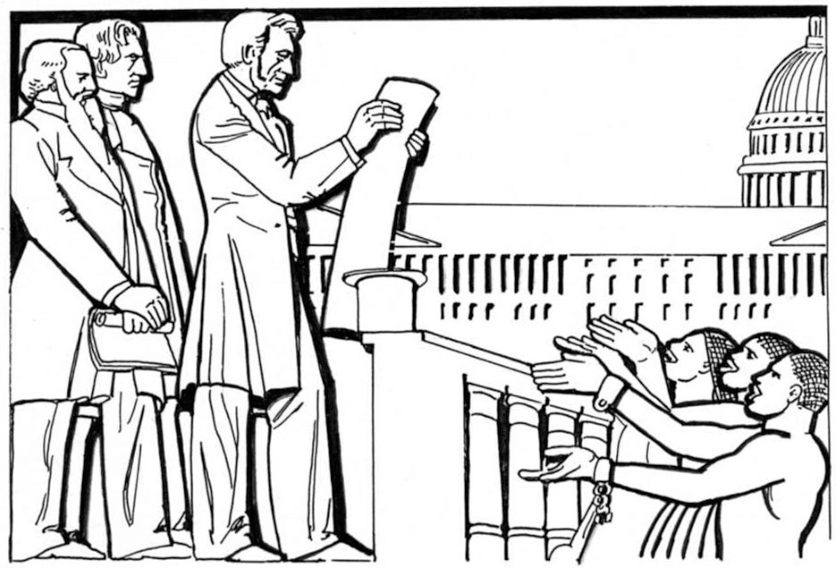
The Emancipation Proclamation (1863)
January 1, 1863 President Abraham Lincoln proclaims all persons held as slaves in the rebelling states shall be free.
The last three panels, two on the east and one around the corner on the north side, finish the story of government and law with events in Nebraska’s political history.
The Nebraska-Kansas Bill (1854)
The Nebraska-Kansas Act established the Nebraska and Kansas Territories, opening this region to settlement and the Transcontinental Railroad.
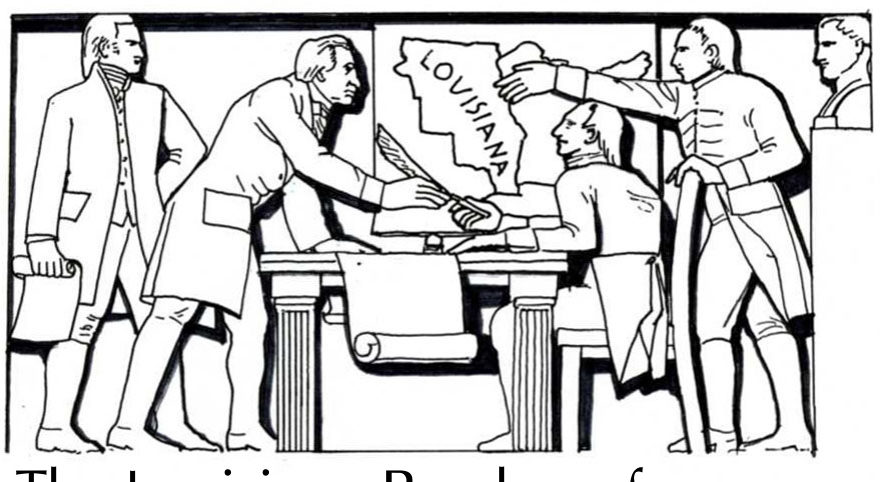
The Louisiana Purchase from Napoleon (1803)
Thomas Jefferson’s purchase of the Louisiana Territory for four cents an acre doubled the size of the United States and acquired the Nebraska territory.
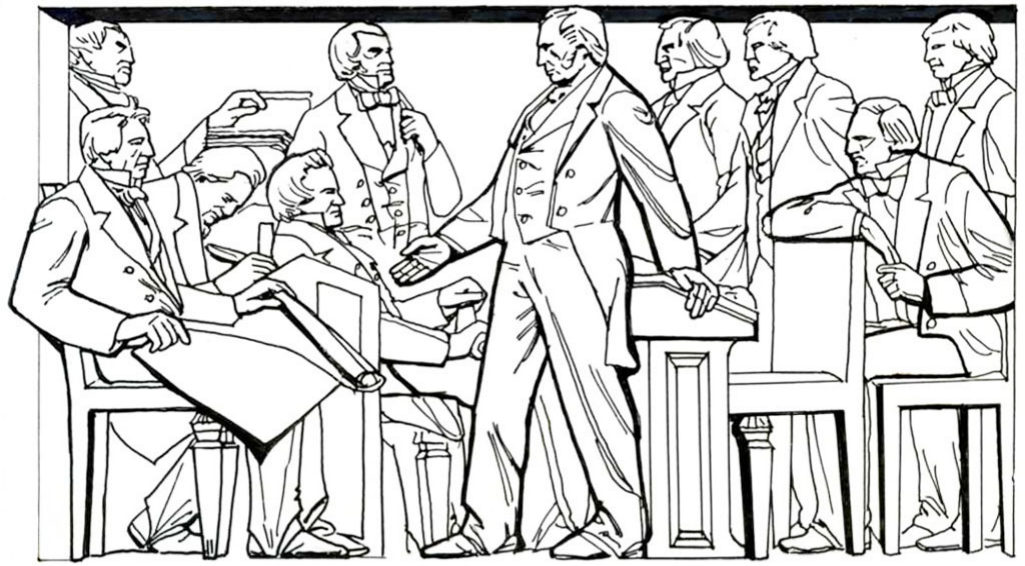
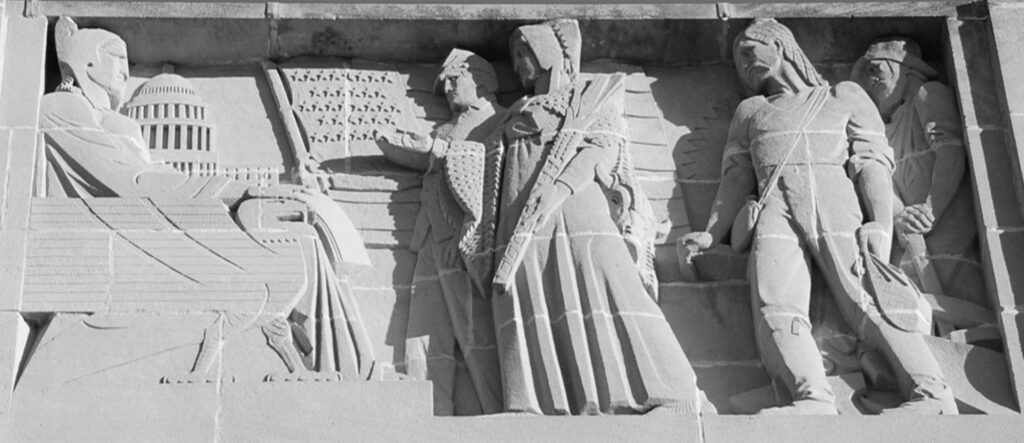
Nebraska Becomes a State March 1, 1867
Nebraska, a pioneer woman, wearing a buffalo robe and carrying a scepter of corn presents Columbia seated on an eagle throne by the US Capitol with the 37th star for the US flag carried by a Civil War veteran. Veterans and the pioneer farmers following along will settle Nebraska.
Back at the north entrance: Nebraska’s first farmers
After walking around the Capitol and learning about Nebraska’s place in the history of western civilization, return to the north entrance sidewalk.
If the North Plaza is closed, please stay on the sidewalk, otherwise climb the steps to continue.
The bison panels flanking the stairs remind us the pioneers weren’t the first farmers to live in Nebraska. Nebraska’s modern agricultural society builds upon the agricultural tradition of Nebraska’s first people.
Bison Panels Represent Native Americans
The bison panels are carved in a Meso-American style and include names of tribes associated with the region that become the state of Nebraska. With the bison, stalks of corn are included. Agricultural tribes associated with Nebraska include the Omaha, Otoe, Pawnee, Sioux, Ponca, and Arikara. Poems and prayers of the Pawnee, Navaho, and Sioux are featured.
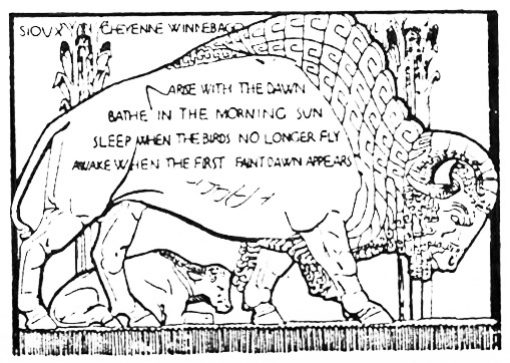
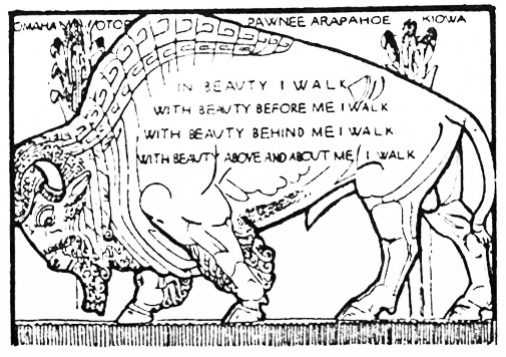
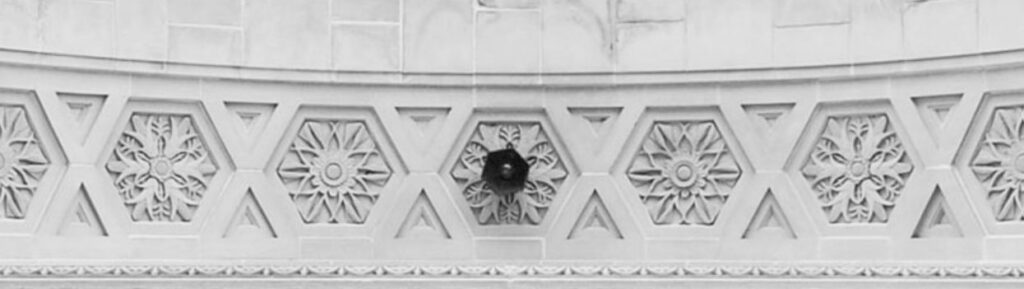
The decoration in the arch above the north entrance reinforces the Native American heritage of Nebraska and a shared agricultural tradition. Bison skulls and bundles of corn are carved across the front entrance.
Bison and corn are held sacred by Nebraska’s first peoples.
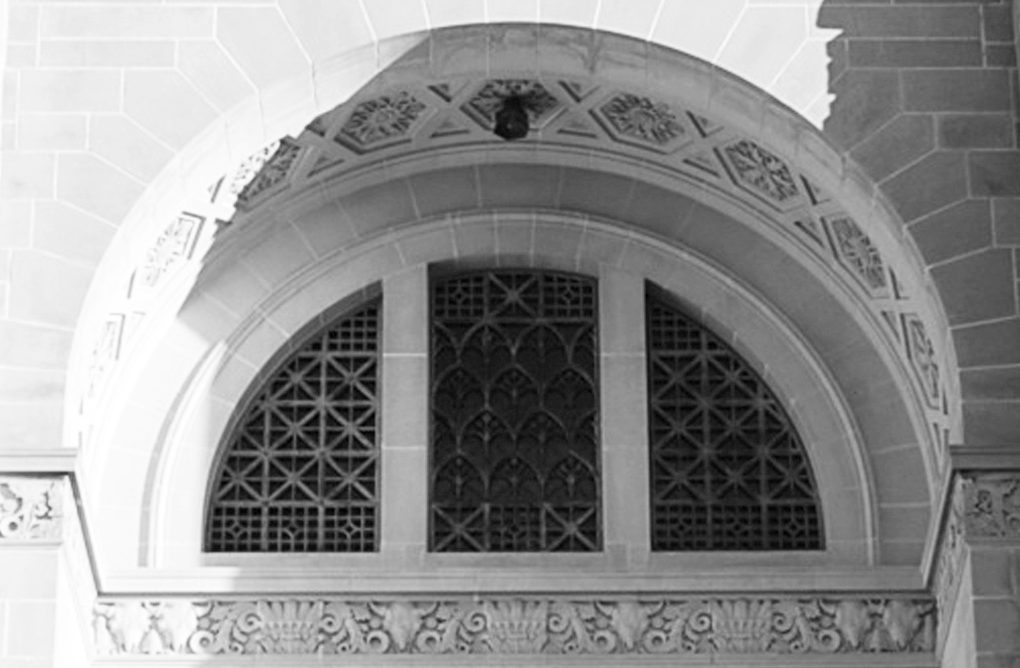
Above the door, sculptor Lee Lawrie created a decorative frieze with grain crops of Nebraska’s two agricultural civilizations. Nebraska’s first farmers based their civilization on corn, growing many varieties of corn for different purposes, nutritional and religious.
Western civilization grew with the cultivation of wheat, brought by pioneers. European pioneers also brought corn adapted from the corn or maize taken to Europe in the 1500’s by early explorers of the new world.
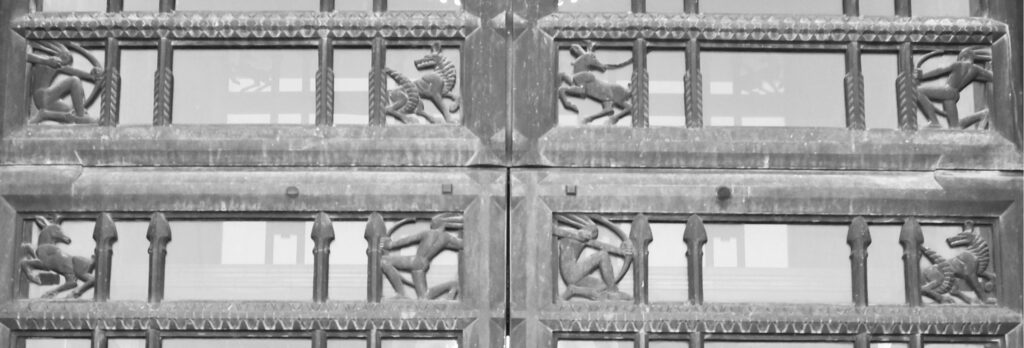
To further recognize the Native American heritage of Nebraska, the bronze doors contain images of hunters with bows. Native animals are also used in the door decoration, the pronghorn antelope was hunted, and the wolf was associated with successful hunting. The vertical elements of the doors have the form of arrows with stylized bison head spacers between them.
The Coming of the Pioneers by Lee Lawrie
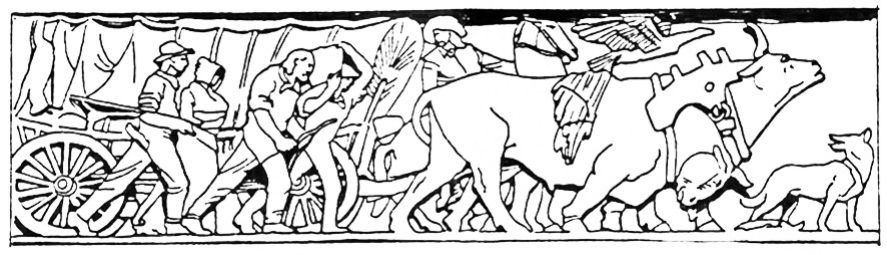
Pioneers arrive with domestic animals, the dog and the yoked oxen, leading the way. The US eagle flies with them in westward expansion. A scout looks toward the life left behind. The family strides forward ready for the hardships ahead. The boy carries a basket of seeds for their new agricultural life and the old man holds a divining rod to find life giving water. The mother holds a baby, the first generation of new Nebraskans. The father carries a gun to provide food, the deer hanging on the wagon.