The laying of the cornerstone for the Nebraska State Capitol on November 11, 1922 was a reminder of the Great War and the sacrifices made by the Nebraska who served. The dedication of the Capitol to the “MEMORY OF THOSE WHO FELL IN THE SERVICE OF THEIR COUNTRY” did not only apply to the veterans of the war in Europe.
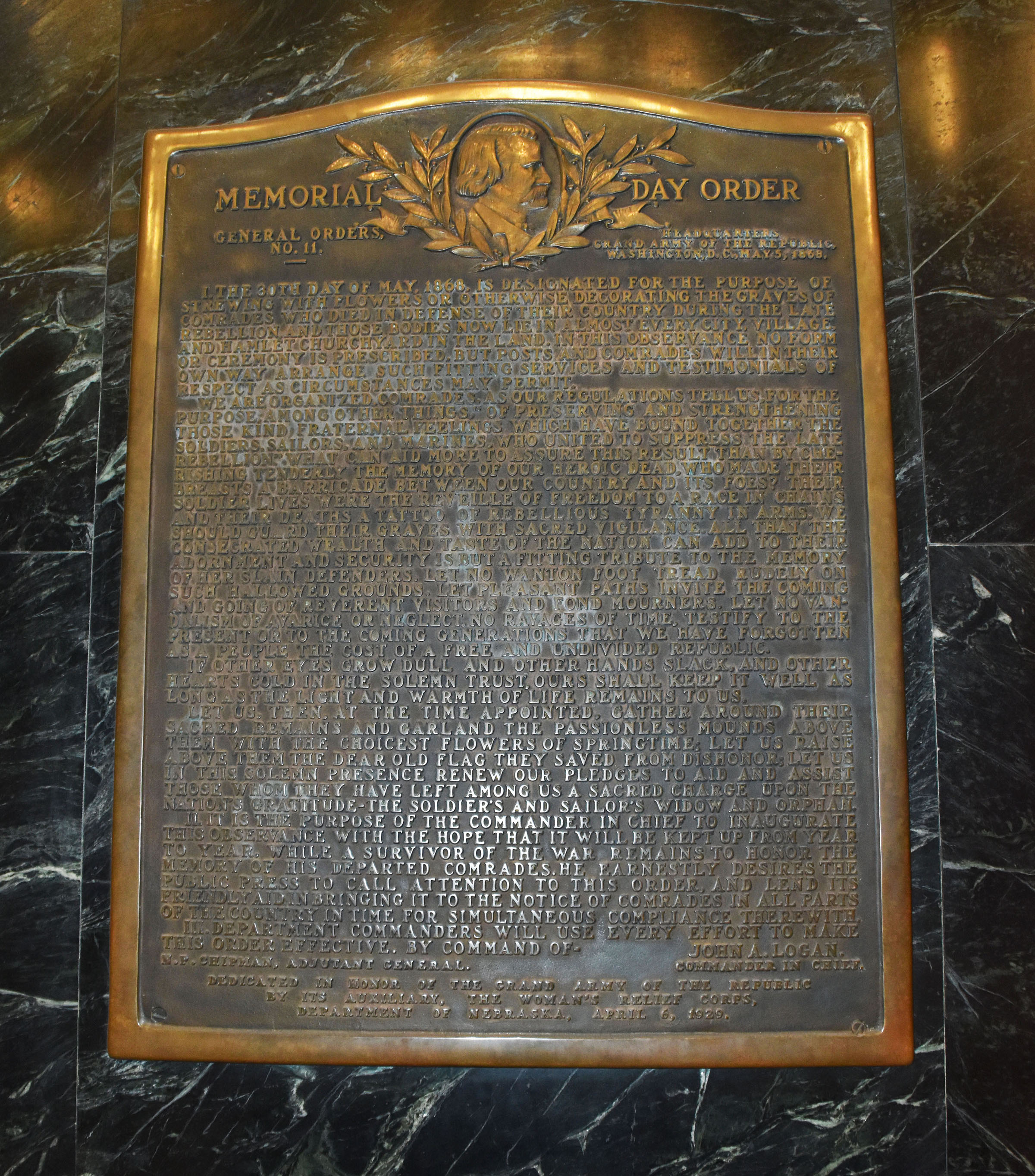
The West Plaza’s Lincoln Monument was dedicated in 191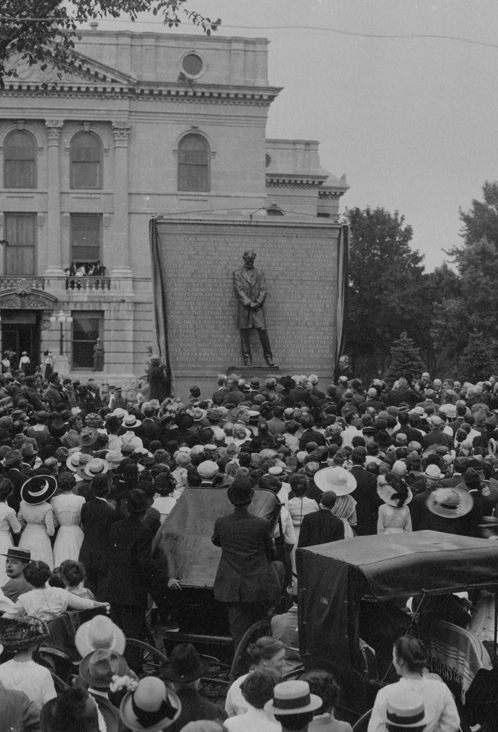 2 and features a statue of Abraham Lincoln as if standing over the graves at the battlefield in Gettysburg. Two Civil War veterans were on either side of the monument to pull away the flags and unveil the statue on the grounds of the second Capitol. Civil War veterans were also in the front rows of the crowd gathered to watch the laying of cornerstone for the third Capitol in 1922. Those Nebraskans alive during construction of the building were familiar with the trauma of the Civil War and tasked the Capitol’s architect Bertram Goodhue with creating a Memorial Chamber where public service for all time could be honored. On the 14th floor, in the Memorial Chamber, bronze plaques featuring the Gettysburg Address and the original 1868 Memorial Day Proclamation are displayed. On May 5, 1868, Commander in Chief of the Grand Army of the Republic John A. Logan designated the 30th day of May for the purpose of placing flowers and decorating the graves of comrades who died in defense of their country. The plaques were dedicated in honor of the Grand Army of the Republic by its auxiliary, the Women’s Relief Corps, Department of Nebraska, April 6, 1929. The new Capitol would be completed three years later. As the summer season begins with the Memorial Day holiday weekend, we should remember the ideals behind the holiday, and think less about barbeque and boating and more about those we are to remember and honor on Memorial Day, our military members who paid the ultimate price for our freedom.